How to refresh old blog posts with AI SEO workflows
A careful process for improving existing articles without losing useful content, rankings, or editorial trust.
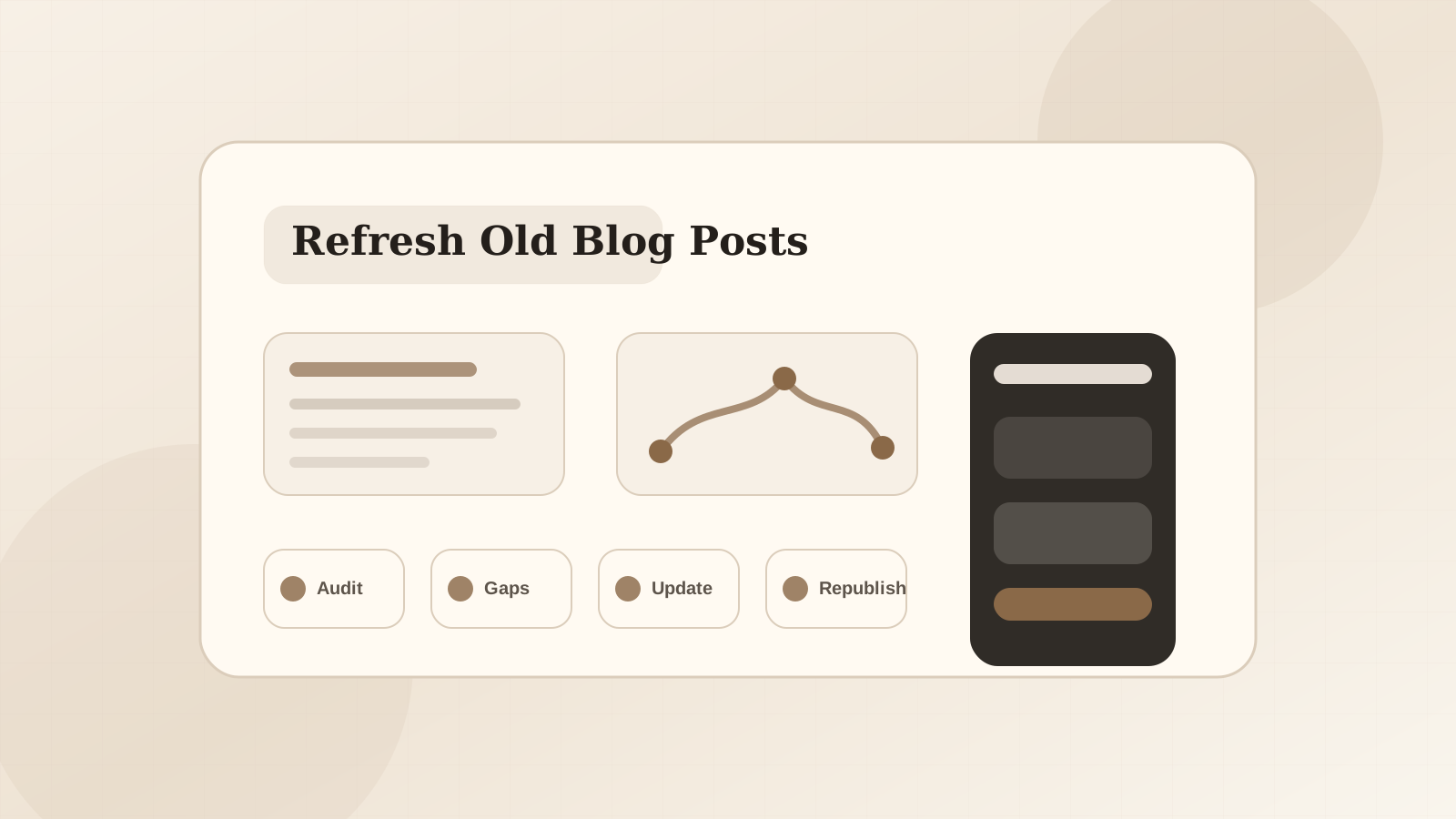
Intro
Start with the job the AI needs to do.
Refreshing old posts with AI is not a rewrite button. The goal is to diagnose what the page is missing, preserve what still works, and improve the article around current intent and usefulness.
Key idea
The operating principle
Good refresh workflows separate diagnosis from drafting. First identify gaps, outdated claims, weak sections, and internal link opportunities. Then use AI to improve the page in controlled passes.
Practical workflow
A simple way to apply it
Collect the current URL, keyword, ranking context, and conversion goal.
Audit intent match, headings, examples, FAQs, and metadata.
Mark sections to keep, update, merge, or remove.
Generate improved sections with clear source and claim requirements.
Review the final post for accuracy, links, formatting, and CTA fit.
Mistakes to avoid
Where AI workflows usually break
Replacing a ranking page with a generic AI draft.
Changing the URL without a migration reason.
Updating claims without checking whether they are still true.
Ignoring internal links from newer related posts.
Related agent skill
WordPress SEO Refresh Agent
Upgrade old blog posts or calculator pages with better intent matching, headings, FAQs, schema recommendations, and content gap fixes.
Free prompt pack
Get the prompt pack behind practical AI workflows.
Download 50 prompts for SEO, content, research, and business automation, then use them with this guide to make the workflow repeatable.
Free download
Get the prompt pack.
Choose your main interest and unlock the Markdown download.
Free during NEOA beta. You can download after submitting the form.
Final recommendation
Make the workflow repeatable before you scale it.
Use AI for diagnosis, structure, and draft improvements, but keep human judgment on what to preserve and what changed materially.