What are AI agent skills? A practical guide for builders
A clear explanation of agent skills, why they are more useful than random prompts, and how creators and businesses can package repeatable AI workflows.
Intro
Start with the job the AI needs to do.
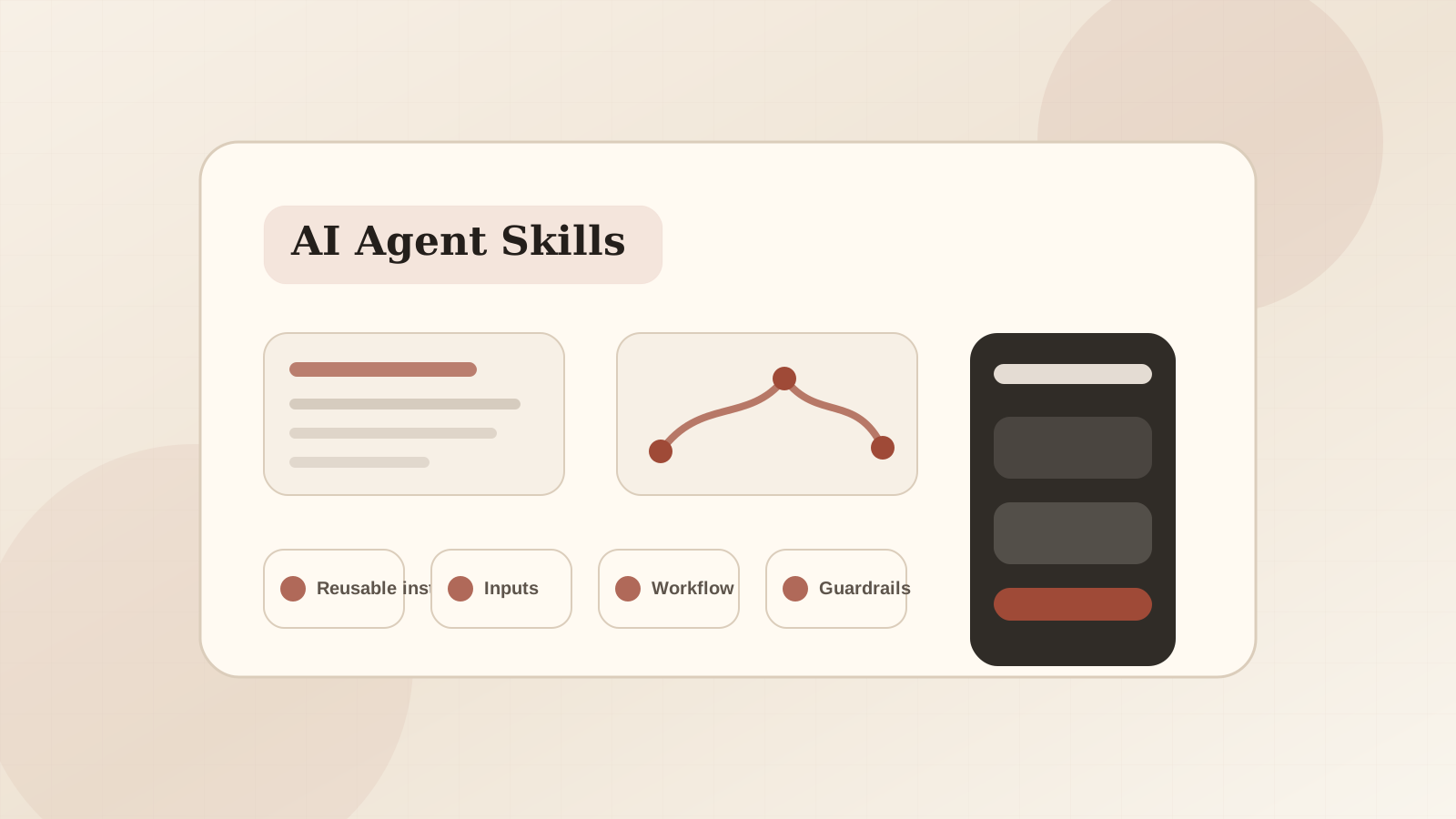
AI agent skills are reusable instruction systems that help an AI model complete a defined workflow with less ambiguity. Instead of asking for one answer, a skill gives the model a role, inputs, process, output contract, and guardrails.
Key idea
The operating principle
The useful shift is from prompt text to operating design. A good skill captures how an expert thinks through a task, what context they need, what quality checks matter, and what final format should be delivered.
Practical workflow
A simple way to apply it
Define the outcome the skill must produce.
List the required inputs and optional context.
Write the workflow steps in the order a human expert would use.
Specify the output sections and review criteria.
Add guardrails for facts, uncertainty, sources, tone, and prohibited shortcuts.
Mistakes to avoid
Where AI workflows usually break
Writing a long prompt with no output contract.
Asking the model to invent facts, citations, testimonials, or credentials.
Mixing several unrelated jobs into one skill.
Skipping examples of acceptable structure and quality.
Related agent skill
Research Brief Agent Skill
A repeatable workflow for converting a complex topic into a clear research brief with assumptions, sources, argument map, risks, and next actions.
Free prompt pack
Get the prompt pack behind practical AI workflows.
Download 50 prompts for SEO, content, research, and business automation, then use them with this guide to make the workflow repeatable.
Free download
Get the prompt pack.
Choose your main interest and unlock the Markdown download.
Free during NEOA beta. You can download after submitting the form.
Final recommendation
Make the workflow repeatable before you scale it.
Start with one repeatable task that already matters to your work. Turn that task into a small skill, test it against real inputs, then improve the instructions only where the output fails.